Third-Party Data Breaches: The Hidden Risk Every Banking CIO Must Address
The financial sector has never been more connected (or more exposed)


Outsourced engagement = Outsized risk
100% Compliance = TrueDigi
Author
Published on
12th January 2026
From outsourced recovery agents and external call centers to SMS, email, and WhatsApp platforms, most banks today rely on multiple third parties for digital debt collection, customer outreach, and recovery operations. It seems convenient and cost-efficient until a data leak, misuse, or a regulatory notice that lands at the bank’s doorstep.
The uncomfortable truth?
The breach doesn’t begin inside the bank. These data breaches happen outside, where control ends, with third-party vendors that lack strong data practices or themselves rely on other subcontractors to handle sensitive customer data.
According to a recent SecurityScorecard survey, 41.8% of data breaches affecting leading fintech companies involved third-party vendors. Looking closer, technology products and services accounted for 63.9% of these third-party breaches, with file transfer software and cloud platforms being the most frequent points of compromise.
In Europe, research shows that 96% of the largest banks experienced at least one third-party breach in the past year, and 97% reported fourth-party risks, data breaches via their vendors’ vendors, highlighting that threats often come from deeply nested vendor ecosystems.
In India, the Reserve Bank of India (RBI) has flagged over-reliance on third-party vendors as a “catastrophic” risk for banks, noting that failures or data breaches at any vendor, or sub-vendor, can disrupt operations and compromise customer data.
This means that even if a bank itself is compliant, its security is only as strong as its weakest vendor. And that’s exactly where the CIO’s challenge begins: balancing operational efficiency with zero compromise on data security, uptime, and compliance, a challenge an AI-driven platform like TrueDigi is built to solve.
Also Read – TrueDigi by Datacultr: Turning Low Efficiency into High Performance
Why Third-Party Data Breaches are a Major Threat to Banks
Banks handle vast amounts of sensitive customer data, names, addresses, dates of birth, mobile numbers, email IDs, account information, and more, making them attractive targets for cyberattacks.
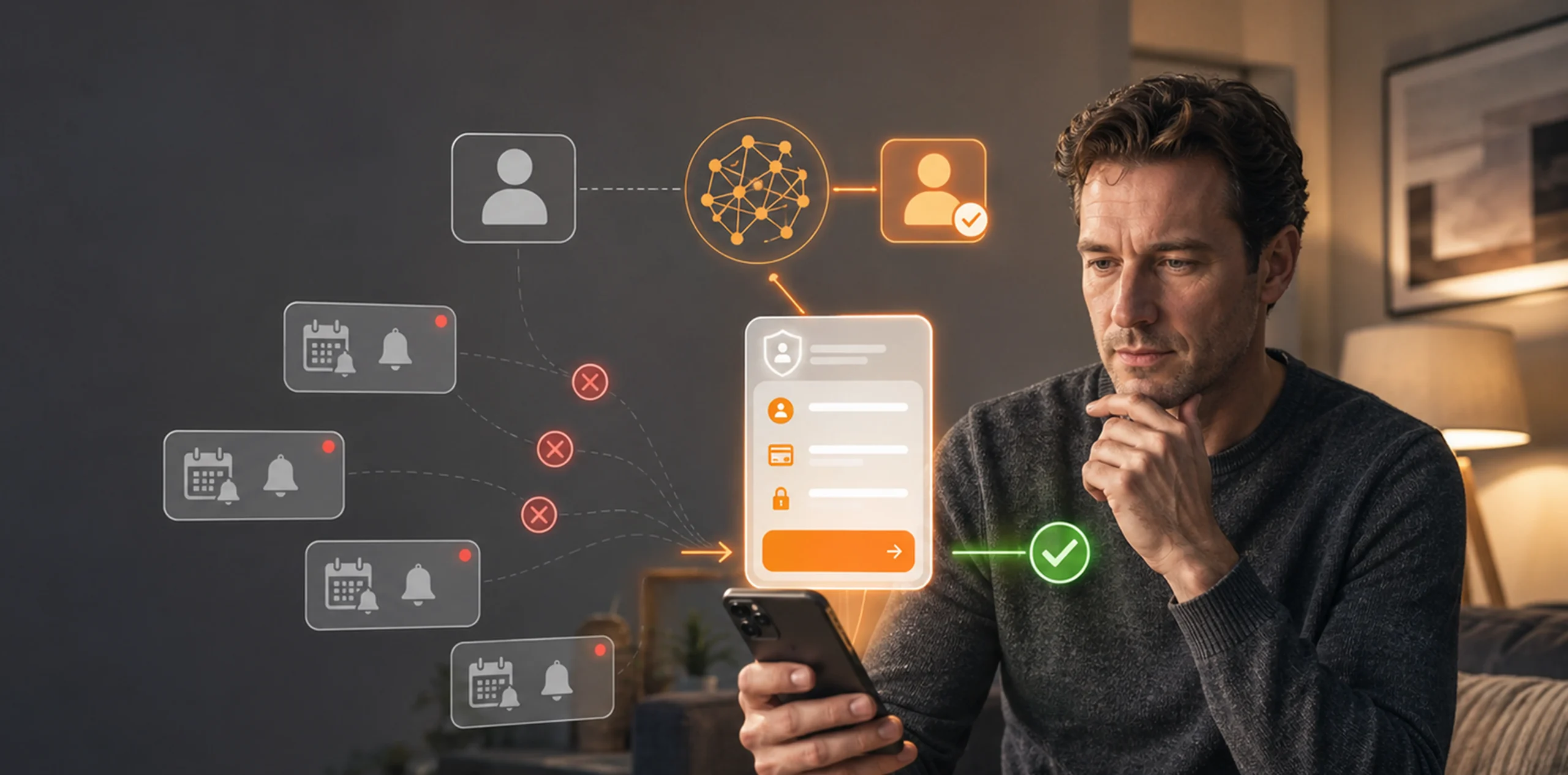
Their growing reliance on third-party vendors for aspects of AI-powered customer engagement, marketing, and digital debt collection adds another layer of vulnerability, creating a security perimeter that is difficult to monitor and control.
Many vendors lack:
Encryption-at-rest and in-transit
SOC 2 Type II or GDPR-grade controls
Multi-zone disaster recovery
True zero-PII architectures
In-country data storage
Encryption-at-rest and in-transit
SOC 2 Type II or GDPR-grade controls
Multi-zone
disaster recovery
True zero-PII
architectures
In-country data
storage
Attackers exploit this gap by infiltrating third-party systems connected to the bank’s infrastructure, using credentials or shared environments to gain indirect access to core banking systems. This exposure is a complete compliance failure and TrueDigi is purpose-built to remove these vulnerabilities.
In 2023, Bank of America encountered one such major data breach, stemming from a third-party compromise. The data breach exposed names, addresses, and Social Security numbers of approximately 6.5 million customers. What starts as a vendor compromise can quickly escalate, turning a single data breach into a crisis that triggers regulatory penalties, financial losses, and reputational damage.
Why CIOs Must Rethink Vendor Trust
For CIOs, third-party data breaches are not just security issues; they are operational and strategic risks. Collections and other banking functions rely on third-party systems, and even brief downtime or interruptions from a breach can stall transactions, delay repayments, and erode customer trust.
Here’s what makes vendor trust a critical concern:

Bank Holds Ultimate Accountability

Expanded Attack
Surface
High-Stakes
Consequences
Data breaches trigger regulatory penalties, operational disruptions, and long-lasting reputational damage.
Continuous Monitoring
Required
To address these challenges, CIOs must move from a mindset of assumed trust to a “trust but verify” approach, combining due diligence, clear contracts, continuous monitoring, and integrated third-party risk management.
This is where platforms like TrueDigi come in.
Also Read: The Future of Banking Apps: Building Deeper Engagement]
TrueDigi: Helping Banks Protect Sensitive Data
Banks no longer have to navigate third-party risk blindly. TrueDigi is Datacultr’s AI-powered, direct-to-device engagement and debt recovery platform, purpose-built for regulated lenders and banks.
It operates through a lightweight SDK placed inside the bank’s own mobile app with a secure orchestration layer to deliver end-to-end digital debt collection and customer engagement journeys.
Most importantly, TrueDigi requires no PII. It operates entirely on a clientID-based architecture, ensuring that customer data never leaves the bank’s secure environment, eliminating the #1 cause of third-party data breaches.
Smart pick for you...
- All Posts


How satisfied are you with your current contact efficiency and RPC rates?
Based on what you've read, do you think TrueDigi can improve your outcomes?
Noted! Let's discuss further
Contact usFollow Us On

Zero-PII + Zero-Exposure Architecture
Zero-PII + Zero-Exposure Architecture
- TrueDigi never stores, processes, or requires mobile numbers, emails, addresses, or any personal identifiers.
- Engagement is triggered entirely via secure, bank-controlled APIs mapped to clientIDs.
- The SDK delivers all interactions directly on the device, ensuring no customer data reaches external vendors.
Secure Communication + Encrypted Execution
Secure Communication + Encrypted Execution
- All interactions between the bank and TrueDigi occur over secure, authenticated channels.
- Communication is encrypted in transit end-to-end.
- The orchestration layer enforces tamper-proof audit trails.
- This architecture supports secure digital interacting across all use cases with complete traceability.
DR-Ready, Audit-Ready
Architecture
DR-Ready, Audit-Ready Architecture
- Hosted with disaster recovery (DR) controls and bank-grade resilience.
- Designed for 99.9%+ uptime for mission-critical collections and engagement workflows.
- Every workflow, including DigiCall, Flash Messages, PTP flows, Digital Legal Notices, skip tracing, risk scoring, and campaign orchestration, is measurable, traceable, and audit-ready.
- Making TrueDigi a resilient digital debt collection and risk-control system.
Compliance-Centric Architecture
Compliance-Centric Architecture
- GDPR compliant.
- Ensures in-country compliance.
- SOC 2 Type II certified. ISO 27001 aligned.
- Supports real-time analytics, reporting, and audit controls required by regulated financial institutions.
Fast Deployment With Lower Operational Risk
Fast Deployment With
Lower Operational Risk
- SDK architecture → fast integration.
- API-controlled orchestration eliminates dependency on external call centers or unsecured communication partners.
- Designed to deliver measurable uplift across digital debt collection, engagement, and recovery journeys, without exposing customer data.
TrueDigi has delivered
67%
Reduction in NPLs
70%
Reduction in cost of collections
4X
Higher resolution rates
5X
Increase in customer engagement
These outcomes demonstrate one of the industry’s strongest models for secure, compliant digital debt recovery and scalable engagement.
For CIOs, TrueDigi transforms third-party risk from a reactive concern into a proactive, strategic capability, safeguarding customer data, ensuring compliance, and reinforcing operational resilience.

About TrueDigi
TrueDigi is Datacultr’s AI-powered, direct-to-device customer engagement and debt recovery platform for banks and lenders. Embedded within the bank’s mobile app, it enables end-to-end journeys across collections and customer lifecycle use cases with 100% contactability, actionability, and real-time measurability.
This is how modern banks protect trust, comply with regulations, and future-proof engagement.
Frequently Asked Questions
How do banks protect customer data when using third-party vendors?
Banks must enforce strong encryption, audit trails, DR readiness, continuous monitoring, and zero-PII frameworks to prevent data breaches in digital debt collection workflows. TrueDigi’s clientID-based architecture ensures data never leaves the bank.
How does TrueDigi improve digital debt collection and engagement securely?
TrueDigi integrates API-driven engagement with GDPR/SOC 2–aligned workflows and encrypted communication to help banks increase right-party contact, PTP rates, and customer response across collections and marketing. Built on a zero-PII, clientID-first architecture, it ensures interactions remain fully compliant and is designed to minimize the risk of PII exposure outside the bank.
Can banks maintain strong customer engagement while managing collections and marketing securely?
Yes. With direct-to-device journeys powered by customer engagement strategies and compliant architecture, banks can run engagement and digital debt collection workflows safely, at scale.
Smart pick for you...
- All Posts
How satisfied are you with your current contact efficiency and RPC rates?
Based on what you've read, do you think TrueDigi can improve your outcomes?
Noted! Let's discuss further
Contact usFollow Us On