The End of OTPs: Why Banks Are Moving to Direct to Device In-App Transaction Approvals
Banks Are Quietly Shifting: The Direct to Device Engagement Era Is Ending OTP Dependency
For over a decade, OTPs have been the backbone of digital authentication. They were simple. Familiar. “Good enough.” But digital systems didn’t stop evolving. Threats did.

Banks Are Quietly Shifting
The OTP Era Is Ending
Author
- April 2, 2026
Today, OTPs are no longer a trust mechanism. They’re a weak checkpoint pretending to be security.
Despite years of investment in fraud controls, messaging-based attacks continue to inflict large-scale losses. Global consumer losses from mobile messaging fraud are estimated at around $80 billion in 2025, remaining above $70 billion in 2026, underscoring a clear reality: authentication built on external messaging channels can no longer be considered secure.
Banks are now moving away from OTPs and replacing them with in-app transaction approvals, not as an experiment, but as a necessary response to rising fraud, weakening trust, and growing pressure from regulators & customers alike.
This shift reflects a deeper reality: traditional authentication systems were never designed for today’s threat environment. And more importantly, they were never designed to support secure, contextual customer decision-making at critical moments. That is why direct to device engagement is becoming more important in modern banking journeys.
Why OTPs Are No Longer Fit for Purpose
OTPs were designed for a very different digital environment. As threat models evolved, the system did not.
1. OTPs rely on unsecured, external channels
SMS and email operate outside the bank’s control. Banks cannot govern message routing, interception risks, device forwarding, or inbox compromise. Yet this external channel is often where the most sensitive part of a transaction, the final approval, takes place.
2. OTPs are highly vulnerable to modern fraud
Fraud today is not about breaking systems; it’s about manipulating users. Phishing attacks are designed to capture OTPs in real time. SIM-swap attacks allow criminals to receive OTPs directly. In both cases, OTPs don’t stop fraud; they enable it.
Globally, regulators and security bodies now openly acknowledge that SMS OTPs are increasingly a liability rather than a security control.
3. OTPs introduce friction at the worst moment
Delayed messages, expired codes, failed retries, roaming issues- these problems occur exactly when a customer is trying to complete a transaction. The result is abandoned payments, increased support calls, and eroding trust.
Security that disrupts the customer experience eventually fails both security and business goals.
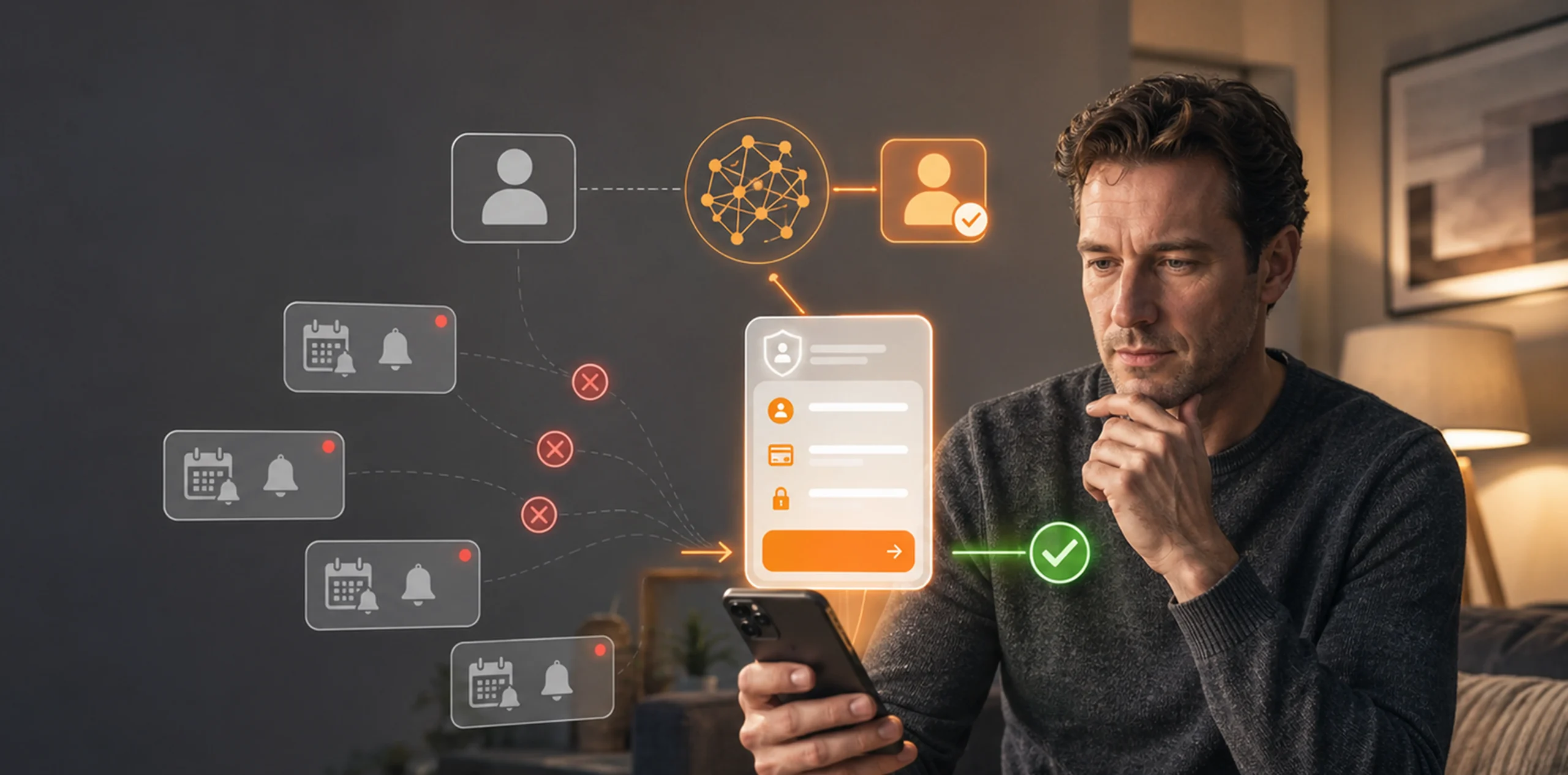
From One-Time Passwords to ‘Always-On’ Trust: Why Banks Need In-App Transaction Approvals
Banks are replacing OTPs with in-app transaction approvals to keep authorisation fully within their mobile applications.
- A transaction is initiated.
- The customer receives an in-app approval prompt.
- Transaction details are visible.
- Approval happens using biometrics or a secure app PIN.
- The transaction is completed.
But this shift changes more than the approval method.
When authentication moves in-app, customer understanding and response timing become part of the security model. Authentication alone is no longer sufficient.
Therefore, banks also need secure, direct to device engagement that guides customers clearly at the point of decision, without relying on external channels. Platforms like TrueDigi are built to support this transition by enabling controlled, in-app engagement at the point of decision.
[Also Read: The Future of Banking Apps: Building Deeper Engagement]
TrueDigi: The Customer Engagement Platform Modern Banking Needs
TrueDigi is an AI-driven customer engagement platform designed for regulated financial institutions that must operate within strict security, compliance, and trust boundaries.
As banks transition away from OTPs, TrueDigi enables them to:
- Deliver secure, in-app engagement aligned with transaction approvals
- Trigger communication based on real-time context, risk, and customer behaviour
- Guide customers during approval, decline, retry, or recovery journeys
- Eliminate reliance on unsafe external messaging channels
- Maintain full auditability and regulatory control
Without a platform like TrueDigi, banks risk:
- Confusion at the point of approval, leading to failed conversions
- Higher support costs from customers needing help during secure flows
- Misinterpretation of messages, increasing transaction abandonment
- Wider fraud windows due to inconsistent risk signals
Unlike traditional user engagement tools, TrueDigi focuses on decision-led engagement, ensuring the right message reaches the right customer at the exact moment a secure action is required.
This is how modern AI powered banking solutions should operate: not as disconnected systems, but as a unified layer supporting secure outcomes. And when that communication is delivered direct to device, banks gain greater control, trust, and consistency at the moment of action.
Smart pick for you...
- All Posts


How satisfied are you with your current contact efficiency and RPC rates?
Based on what you've read, do you think TrueDigi can improve your outcomes?
Noted! Let's discuss further
Contact usFollow Us On

Conclusion: Secure Engagement Is the New Security Frontier
The end of OTPs marks a permanent shift in how banks secure transactions and how customers participate in them.
Security is no longer about sending codes; it is about controlling the moment of decision. In-app approvals mitigate many vulnerabilities, but they also expose a critical truth: without controlled, contextual engagement, even the strongest authentication can fail.
TrueDigi gives banks that control. By enabling secure, direct to device engagement inside the bank’s own ecosystem, TrueDigi ensures customers act with clarity, confidence, and intent at the moments that matter most.
The future of secure payments is not just about what approves a transaction; it is about how customers are guided through the secure path toward approval.

How does TrueDigi improve compliance and data privacy?
OTPs rely on external systems—SMS gateways, aggregators, and third-party vendors.
TrueDigi operates entirely within the bank’s app, ensuring:
- No PII exposure
- No third-party data leakage
- Full auditability and regulatory control
Trust stays where responsibility lies.
About TrueDigi
TrueDigi is Datacultr’s AI-powered, direct to device customer engagement and debt recovery platform for banks and lenders. Embedded within the bank’s mobile app, it enables end-to-end journeys across collections and customer lifecycle use cases with 100% contactability, actionability, and real-time measurability.
This is how modern banks protect trust, comply with regulations, and future-proof engagement.
People also ask
How do in-app transaction approvals improve security compared to OTPs?
In-app transaction approvals happen inside the bank’s mobile app, using device-bound authentication such as biometrics or app PINs. This removes exposed codes, reduces phishing risk, and gives customers clearer visibility into what they are approving. Platforms like TrueDigi support this shift by enabling secure, direct to device engagement that aligns customer prompts with in-app approval flows.
Why are OTPs considered insecure today?
OTPs can be intercepted, forwarded, socially engineered, or misused during SIM swaps. In many fraud cases, the OTP is entered correctly by the wrong person. TrueDigi eliminates OTP dependency by enabling in-app, device-bound verification that never leaves the secure application environment.
Does TrueDigi replace OTPs completely?
TrueDigi does not force a hard replacement; it enables a progressive transition.
Banks can:
- Reduce OTP usage
- Limit OTPs to edge cases
- Shift critical workflows fully in-app
The result: fewer OTPs, fewer failures, and stronger trust by design.
Smart pick for you...
- All Posts
How satisfied are you with your current contact efficiency and RPC rates?
Based on what you've read, do you think TrueDigi can improve your outcomes?
Noted! Let's discuss further
Contact usFollow Us On