Outdated Data = Missed Recoveries: Rethinking Skip Tracing in Debt Collection
Stop Chasing Old Records
Find the Right Customer
Author
- October 7, 2026
Skip tracing in debt collection is often treated as a last resort. Banks begin tracing only after calls go unanswered, messages bounce, and the account moves deeper into delinquency.
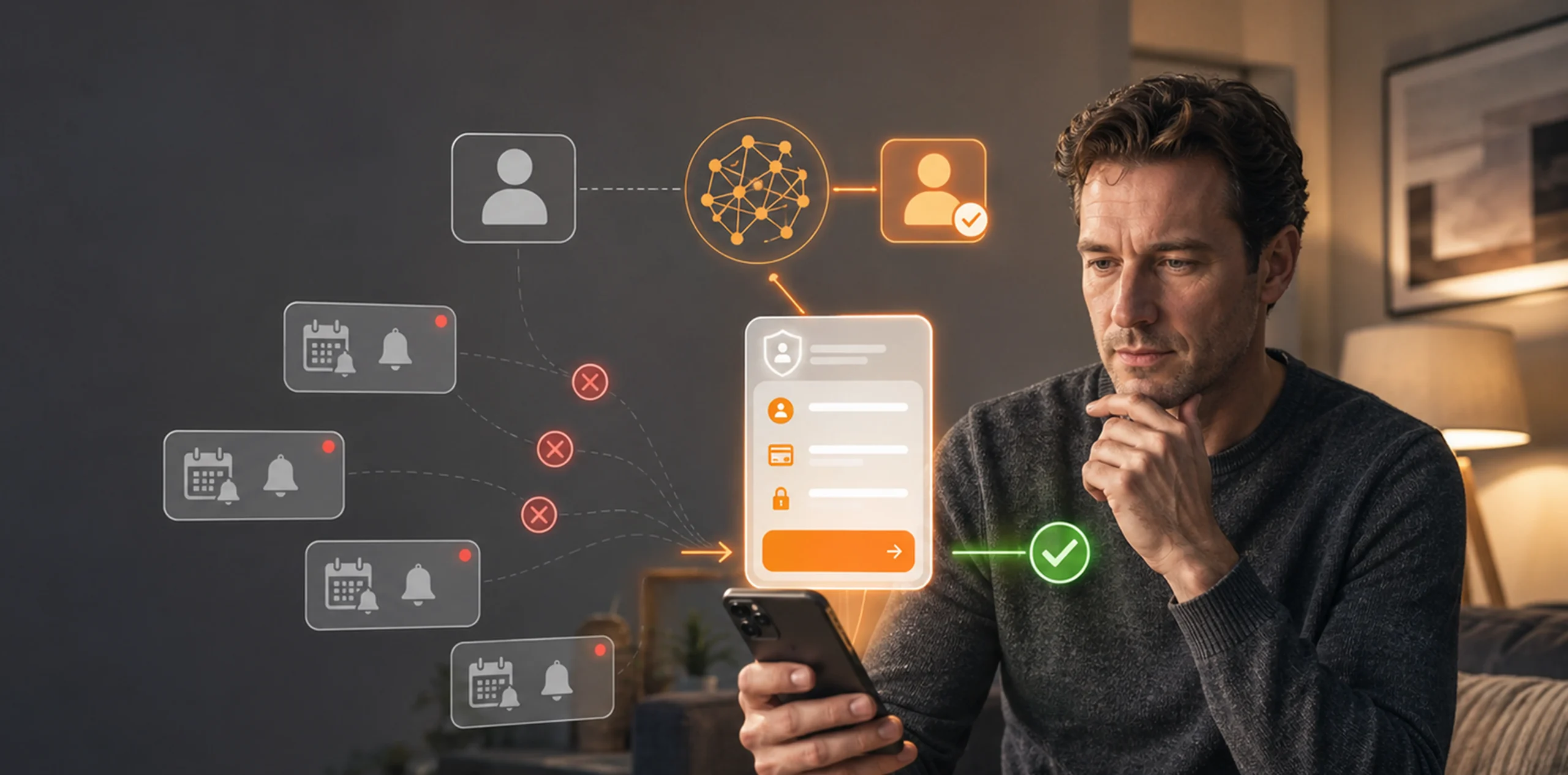
But customers rarely become unreachable overnight. Their contactability usually declines over time: a number becomes inactive, an address changes, communication repeatedly fails, or the customer stops responding through previously active channels.
If banks detect these changes early, skip tracing can become more than a search for missing customers. It can help verify current contact information, improve right party contact, and prevent collection teams from repeatedly acting on outdated records.
Why Customer Contact Information Becomes Unreliable
A customer’s record may appear complete and still be unusable. Here’s when contactability declines:
- A customer changes their primary number or SIM
- A previously active number is disconnected or reassigned
- The customer relocates without updating the bank
- An email address becomes inactive
- Repeated delivery failures are not investigated
- Contact information remains unchanged across a long account lifecycle
Searching for additional numbers or addresses does not solve the problem. Before using newly available information, the bank must determine:
1
How recently was it verified?
2
Can it be reliably linked to the customer?
3
Is it likely to improve the chances of contact?
Without these checks, skip tracing tools may increase unsuccessful outreach or direct collection activity towards the wrong person. The challenge is not simply finding more data. It is identifying information reliable enough to guide the next collection action.
How TrueDigi Strengthens Skip Tracing in Debt Collection for Banks
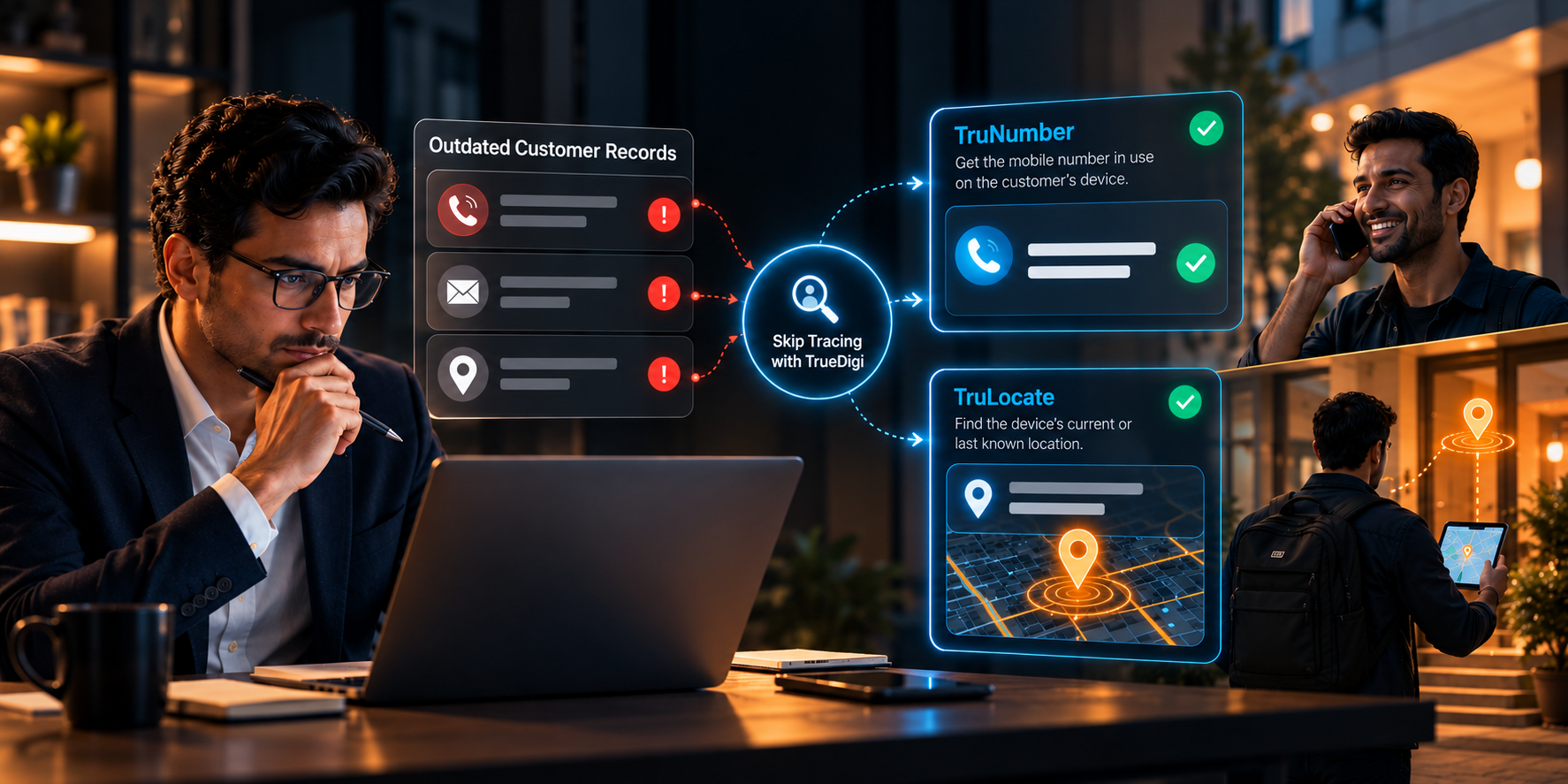
TrueDigi helps banks answer two practical questions: Which number is currently relevant, and where should the next collection effort be directed?
TruNumber: Retrieve the Mobile Number in Use
TruNumber is a consent-driven feature that retrieves the mobile number currently being used on the customer’s registered device, that is, the device on which the bank’s app is active.
It helps banks:
- Establish right party contact using the in-use mobile number
- Reduce time and resources spent on traditional calling and collection methods
- Improve collection-agent efficiency and productivity
TruLocate: Find the Device’s Current or Last Known Location
TruLocate uses consent-based, real-time GPS data to provide the device’s precise current or last-known location directly to the collection team.
It helps banks:
- Locate devices without searching across a broad area
- Provide field officers with a direct route to the available location
- Reduce the time, effort, and cost involved in field collections
Together, TruNumber and TruLocate make skip tracing:

100%

100%

70%
For banks, this means fewer unsuccessful calls, less time spent locating customers, better-directed field visits, and more collection effort reaching the intended customer.
[Also Read: Debt Collection in Banking: Why Digital Notices Are Becoming Critical]
Conclusion: Make Skip Tracing an Earlier Debt Collection Capability
Effective skip tracing is not about finding the largest volume of customer data. It is about recognising when contact information is becoming unreliable, evaluating the strongest available information, and choosing the next action most likely to reach the intended customer.
When integrated into the digital debt collection process, TrueDigi’s skip tracing tools can move from a late-stage search exercise to an ongoing contact-intelligence capability, helping banks improve right party contact while using collection resources more effectively.
Smart pick for you...
- All Posts


How satisfied are you with your current contact efficiency and RPC rates?
Based on what you've read, do you think TrueDigi can improve your outcomes?
Noted! Let's discuss further
Contact usFollow Us On

About TrueDigi
TrueDigi is Datacultr’s AI-powered, user-trusted, direct to device customer engagement and debt recovery platform for banks and lenders. Embedded within the bank’s mobile app, it enables end-to-end journeys across collections and customer lifecycle use cases with 100% contactability, actionability, and real-time measurability.
Improve right party contact and collection efficiency with consent-based contact and location intelligence.
People also ask
How does skip tracing support debt collection?
Skip tracing helps identify the mobile number currently being used on the customer’s registered device and the current or last known location of the device. Banks can use these insights to improve digital outreach, verify customer details, or plan field visits more effectively.
Should every unsuccessful contact attempt trigger skip tracing?
No. A single unanswered call or message does not necessarily indicate a contactability problem. Banks should define triggers based on repeated failures, invalid-number responses, undelivered communications, contact-record age, and the customer’s previous response behaviour.
How should banks prioritise accounts for skip tracing?
Banks can prioritise accounts based on exposure, delinquency stage, contact-failure history, record recency, previous engagement, available alternative information, and the likely cost of further collection activity.