Omnichannel Marketing Challenges and
Solutions for Banks

Beyond More Channels
From Outreach to Action
Author
- June 26, 2026
For years, omnichannel marketing promised banks a simple advantage: reach customers wherever they are. SMS, email, WhatsApp, push notifications, calls, and app alerts were expected to improve engagement. But for many banks, adding more channels has not created better outcomes. It has created more noise.
Customers are receiving more messages than ever, yet attention and trust are harder to earn. The real challenge is not reach, its relevance, credibility, and measurable action. This raises important questions:
Will the customer trust the communication?
Is the bank engaging the customer at the right moment?
Is the message connected to the customer’s current need?
Is the bank able to measure whether the engagement led to a real business outcome?
For banks, this creates a serious gap between communication and customer action.
The Real Problem with Traditional Omnichannel Marketing
01
It Optimises for Delivery, Not Relevance
Most omnichannel tools are built to send messages across multiple channels and optimised for delivery. But delivery alone does not create engagement.
For example, a customer who opens a savings account needs a different message from someone who has missed a loan repayment. Similarly, a customer who abandons onboarding needs a clear next-step nudge, not a generic offer. This is a real gap in banking communication: one consumer study found that 54% of customers felt bank communication was not personalised enough, while 39% found it only somewhat, hardly, or not at all relevant.
When banks communicate without context, the message feels generic. Over time, generic communication leads to disengagement.
02
Customer Data Remains Fragmented
Banks already hold rich customer data across core banking systems, CRMs, loan systems, app behaviour, service records, and collections platforms.
The problem is that these systems often do not work together in real time. As a result, marketing teams rely on broad segments and delayed insights instead of live customer context. This limits personalisation and makes campaigns feel disconnected from the customer journey.
03
Personalisation Is Mostly Surface-Level
“Hi [First Name]” is not personalisation.
In banking, meaningful personalisation depends on customer context: financial stage, product usage, recent actions, risk signals, and next-best need. But most banking apps are still built for transactions, not personalised communication. Even when banks have the right insights, the app often cannot turn those insights into timely, action-led messages. PYMNTS reported that 72% of consumers say personalisation influences where they bank.
04
No Real Feedback Loop
Many campaigns are still measured through delivery rates, open rates, and clicks. But banks need to know more than whether a message was opened. They need to know whether the campaign led to a completed action at a customer level. This is where all app-based notification platforms fail.
Did the customer finish onboarding? Did they activate the card? Did they make a repayment? Did they enrol for autopay? Without this visibility, marketing teams cannot clearly connect campaigns to business outcomes, pushing them to unnecessary third-party platforms to send SMS, calls and emails.
Smart pick for you...
- All Posts


How satisfied are you with your current contact efficiency and RPC rates?
Based on what you've read, do you think TrueDigi can improve your outcomes?
Noted! Let's discuss further
Contact usFollow Us On

How TrueDigi Changes Customer Engagement for Banks
TrueDigi is not another tool that adds more channels to your communication stack. It’s a fundamentally different approach, built on context, trust, and measurable customer action. With TrueDigi, banks can achieve a 5X increase in customer engagement.
It reduces data exposure by working with internal customer identifiers, without requiring banks to share customer PII with external vendors.
Engagement Happens Inside Your App
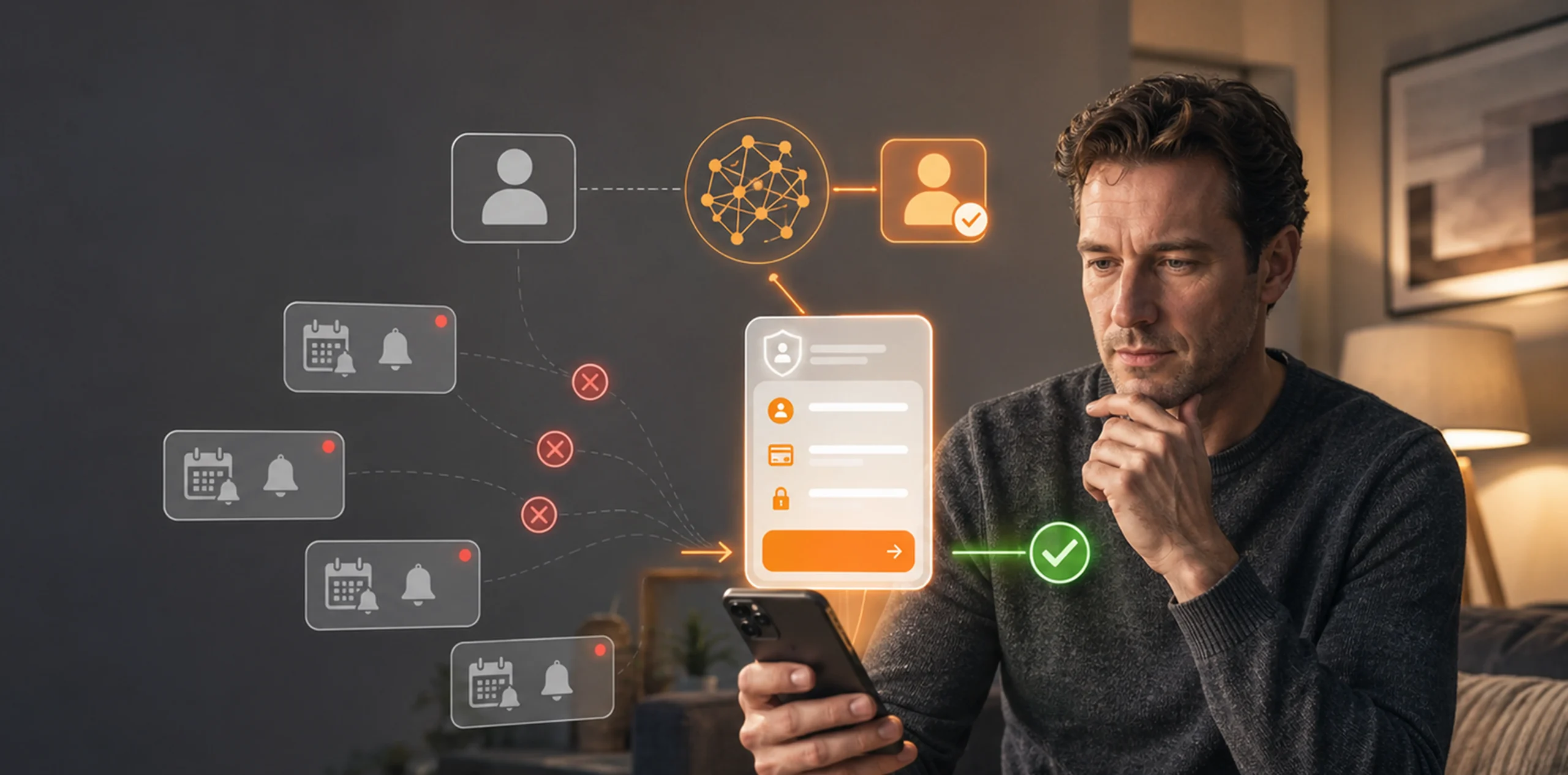
TrueDigi works through a lightweight SDK embedded inside your bank’s own mobile app. This means the bank can engage customers in an environment they already recognise, instead of depending only on external SMS, email, or unknown calls.
This helps solve a major trust gap in banking communication. The customer does not have to wonder whether the message is genuine, spam, or fraud. The message comes through a verified bank-owned environment, which makes it easier to trust and act on.
One Platform for Multiple Communication Formats
TrueDigi allows banks to deliver voice, video, image, and text-based messages from a single platform. Teams can choose the right format for each use case, from onboarding guides and product education to repayment reminders, offer prompts, and legal notices.
This reduces the need for separate tools across calls, videos, notifications, and message delivery, while giving banks better control, consistency, and visibility across customer engagement.
Context Decides the Communication
Traditional omnichannel campaigns often work on broad segments and fixed schedules. TrueDigi helps banks move to journey-based engagement. Banks can trigger messages based on customer actions, lifecycle stage, product usage, or repayment behaviour, making communication more relevant and less intrusive.
[Also Read: Customer Engagement Strategies for Banking Leaders]

Conclusion
Traditional omnichannel asks: how do we reach more customers across more channels? TrueDigi asks: what does this customer need right now, and how do we deliver it in a way they’ll trust?
That’s not a small difference. It is a shift from more outreach to better engagement. When customers receive communication that’s relevant, timely, and delivered through a channel they trust, they engage. They respond. They act. That’s what effective marketing looks like.
About TrueDigi
TrueDigi is Datacultr’s AI-powered, user-trusted, direct to device customer engagement and debt recovery platform for banks and lenders. Embedded within the bank’s mobile app, it enables end-to-end journeys across collections and customer lifecycle use cases with 100% contactability, actionability, and real-time measurability.
Discover how TrueDigi helps banks achieve up to 5X higher customer engagement.
Frequently Asked Questions
How can banks reduce drop-offs in digital customer journeys?
Banks can reduce drop-offs by engaging customers at the exact point where they pause, abandon, or delay an action. With TrueDigi, banks can trigger timely in-app nudges for incomplete onboarding, pending documents, autopay setup, card activation, or loan application steps.
How can banks personalise marketing without compromising customer data privacy?
Effective personalisation in banking does not require sharing customer PII with external vendors. Platforms like TrueDigi use internal customer identifiers to trigger contextual, behaviour-based communication, keeping engagement personalised, compliant, and secure.
How does TrueDigi help banks improve marketing campaign outcomes?
TrueDigi helps banks connect marketing campaigns to measurable customer actions such as completed journeys, product applications, enrolments, and conversions. This gives teams clearer visibility into what is working, reduces dependency on fragmented channels, and helps optimise campaigns based on real outcomes.
Smart pick for you...
Are you happy with your current customer engagement efficiency?
Noted! Let’s discuss further
Contact usNoted! Let’s discuss further
Follow Us On